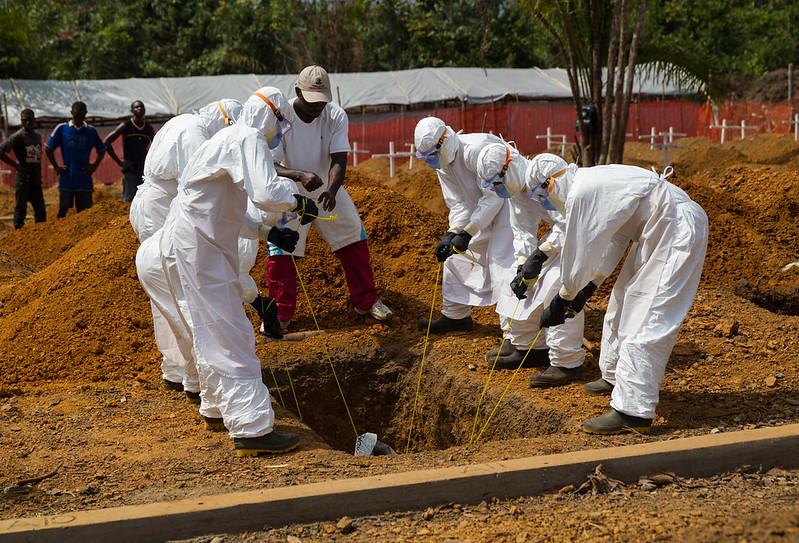
Kenya’s Ebola Cases Rise to Seven After Four New Infections, Including Three Health Workers
Kenya has confirmed four additional cases of Bundibugyo virus disease, commonly described as Bundibugyo Ebola, raising the national total to seven confirmed cases, including the first patient who died earlier this month.
The Ministry of Health announced the new infections on Saturday, October 17, 2026, saying they involved a close male relative of the deceased index patient and three health workers who treated him.
The development marks the first known transmission of the virus within Kenya. However, health authorities maintain that there is no evidence of community transmission and that the risk to the general public remains low, largely because all four new patients were already in quarantine when they developed symptoms and tested positive.
What the Ministry Confirmed
According to the Ministry of Health, the four new patients developed fever as their first symptom. They were immediately isolated before samples were collected and tested. The samples returned positive at both the National Virology Reference Laboratory and the Kenya Medical Research Institute (KEMRI) laboratory.
Three of the new patients are health workers: two men and one woman, aged 29, 35 and 32 respectively. The ministry said they attended to the first patient at a Nairobi hospital on October 3 and 4, before being placed in quarantine on October 9. The fourth patient is a close male relative of the index case and had been in quarantine since October 6.
All four are receiving supportive care at designated treatment facilities. The ministry said early detection while the patients were under quarantine reduced the possibility of further exposure to their families, colleagues and the wider public.
How the Outbreak Began
The first Kenyan case involved a Kenyan citizen who fell ill while living in the Democratic Republic of the Congo (DRC), where he had been treated at several health facilities. He travelled by road through Beni to Kampala, Uganda, on October 2, then flew to Nairobi, arriving on October 3.
On arrival in Nairobi, he was taken to hospital and isolated. Samples tested positive for Bundibugyo virus at both the National Virology Reference Laboratory and KEMRI. Despite supportive treatment, he died on the night of October 5 and was buried the following day under Kenya’s safe and dignified burial protocol.
Kenya notified the World Health Organization (WHO) under the International Health Regulations on October 6. The WHO says Kenya is the fourth country to confirm Bundibugyo virus disease during the current regional event, after the DRC, Uganda and France.
Why the New Cases Matter
The four new infections are significant because they show that the virus passed from the imported case to people in Kenya. Until now, the earlier second and third cases had already demonstrated local transmission among close contacts, but the latest announcement confirms infections among frontline health workers as well.
That does not necessarily mean the outbreak is spreading widely. The fact that all four patients were already in quarantine suggests that contact tracing and isolation measures identified them before they could move freely in the community. The Ministry of Health says this is evidence that the response system is detecting cases early.
Still, infections among health workers are a warning sign. Ebola viruses spread through direct contact with the blood or body fluids of an infected person, or with contaminated materials. Health workers are especially exposed during patient care, particularly in the early stages when the illness may resemble malaria, typhoid or other febrile diseases.
Contact Tracing and Quarantine
Kenyan authorities have identified 130 contacts linked to the outbreak. As of Saturday, 128 had been traced and placed in quarantine, while efforts continue to locate the remaining two. That represents 98.5 percent of listed contacts, above the 85 percent global benchmark cited by the ministry as necessary to interrupt transmission chains.
The contact list initially included family members and health workers who cared for the first patient, as well as passengers and crew from the flight that brought him to Nairobi. WHO reported on October 6 that Kenya had listed 28 contacts, was tracing 23 passengers and four crew members, and had begun arranging follow-up and quarantine for people assessed to be at risk.
The expansion from 28 listed contacts to 130 reflects the widening investigation as authorities reviewed exposure history, hospital interactions and travel contacts. It also reflects the urgency of finding every person who may have been exposed before they develop symptoms or interact with others.
What Is Bundibugyo Virus Disease?
Bundibugyo virus disease is a viral haemorrhagic fever caused by the Bundibugyo virus, a species of orthoebolavirus related to Ebola viruses. It is severe and can be fatal. The virus was first detected in Uganda in 2007.
It spreads through direct contact with the blood or body fluids of an infected person, or with contaminated objects and materials. It is not known to spread through casual contact such as being near an infected person without exposure to bodily fluids.
There are currently no approved vaccines or specific antiviral treatments for Bundibugyo virus disease. Treatment is supportive, focusing on hydration, management of symptoms and complications, and close monitoring. Candidate vaccines and therapies are being evaluated in clinical trials.
Kenya’s Response Measures
The government says it has intensified case investigation, surveillance, contact listing and risk communication. Screening has also been strengthened at high-risk points of entry, while communities are being engaged to encourage early reporting of symptoms and safe health-seeking behaviour.
Kenya had been on high alert since May 2026, when outbreaks were declared in the DRC and Uganda. By October 6, the country had screened more than 652,000 travellers, tested 267 suspected samples and trained about 5,000 health workers on Ebola prevention and management.
WHO and partners have supported the Ministry of Health and the National Public Health Institute with Ebola simulation exercises, rapid-response training, updated surveillance tools and community engagement. The organisation also delivered about 1,000 Ebola tests and 1,000 personal protective equipment kits to high-risk counties.
Isolation units have been identified and assessed across 27 high-risk counties, while case managers have been trained and surveillance systems updated to ensure suspected cases are quickly reported and investigated. Kenya’s Ebola preparedness score rose from 66 percent in May to 82 percent in July 2026, according to WHO.
Risk to the Public
The Ministry of Health has repeatedly stated that the risk to the general public remains low. It says there is no evidence of community transmission, and it has not imposed restrictions on travel, trade or public gatherings.
That assessment is based on the pattern of infections so far: all confirmed cases have been linked to the index patient or his close contacts, and the latest patients were detected while in quarantine. The absence of unlinked cases is important, because unexplained infections in people with no known exposure would be a stronger indication of undetected community spread.
However, the situation remains fluid. The two remaining untraced contacts are a priority because unidentified exposures can allow further chains of transmission. The coming days will be critical in determining whether quarantine and contact tracing continue to contain the outbreak.
Regional Context
The Kenyan cases are linked to an ongoing Bundibugyo virus disease outbreak in the DRC, which WHO describes as the second-largest Ebola outbreak ever recorded, with more than 9,000 cases and more than 4,000 deaths. Uganda ended its latest outbreak in August 2026, while France reported a travel-related case in June 2026.
WHO has advised against travel or trade restrictions on the DRC, Uganda or Kenya based on currently available information. The organisation says such measures are not supported by the evidence and can disrupt essential travel, trade and humanitarian operations without stopping the spread of disease.
Written by
Lawrence JLawrence John is the Founder and Editor of Africa Daily Dispatch, an independent digital publication focused on delivering timely, accurate and context-driven coverage of Africa and the wider world.
See more of our stories on Google
Add The Africa Daily Dispatch as a preferred source and we'll appear more often in your Top Stories.
Comments
Join the conversation.
Loading comments…
.jpg?sfvrsn=c107b17f_12)