72% of Kenyans Skip Health Checks Because They Feel Healthy
Feeling healthy is the leading reason most Kenyans skip routine medical screening, according to a new national survey that exposes a critical gap between perception and actual health risk. The findings underscore why non-communicable diseases (NCDs) like hypertension, diabetes and high cholesterol continue to surge undetected across the country, often until complications arise.
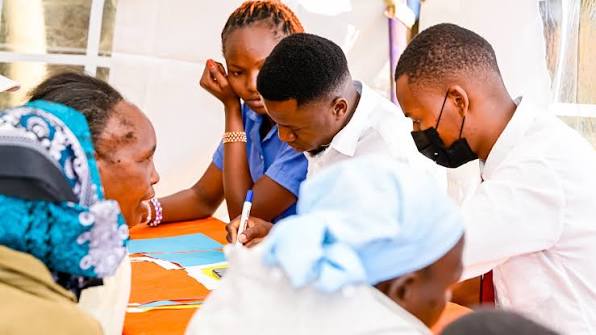
The Know Your Numbers (KYN) Survey, carried out by Ipsos Kenya for the advocacy group Doctors for Healthy Living (D4HL), found that 72% of respondents who had not undergone recent health checks said they skipped testing because they felt healthy. Other reasons were far less common: 18% cited lack of time, 12% inconvenient clinic hours, and only 10% mentioned cost.
This pattern reflects a widespread belief that medical check-ups are only necessary when symptoms appear. Yet many of Kenya’s biggest killers, high blood pressure, Type 2 diabetes, high cholesterol, and several cancers, often develop silently for years before causing noticeable illness. By the time symptoms emerge, disease may already be advanced, treatment more complex, and outcomes poorer.
Dr Robert Mathenge, co-founder of Doctors for Healthy Living, summarised the core problem: “One of the biggest challenges in preventive healthcare is that many people equate feeling healthy with being healthy.”
Awareness is high, but action is low
The survey also reveals a striking mismatch between knowing about health risks and actually checking one’s own status. Among the 1,100 connected, economically active adults surveyed in urban and peri-urban Kenya:
90% knew about blood pressure
78% knew about blood sugar
66% knew about body mass index (BMI)
63% knew about cholesterol
However, actual screening rates were much lower. While 79% had checked their blood pressure at least once and 59% had measured their BMI, only 47% had ever tested their blood sugar. Cholesterol testing fell to 15%, and a mere 9% had ever measured their waist circumference.
In the 12 months before the survey, recent screening was even weaker: 38% had tested blood sugar, 10% cholesterol, and just 6% waist circumference. Waist circumference, the least understood indicator, known to only one in four respondents, is nonetheless a key marker for metabolic and cardiovascular risk.
These figures highlight a “knowing–doing” gap: many Kenyans understand the concepts but do not translate that knowledge into regular personal monitoring.
Gender and setting matter
The data also show clear gender differences. Women reported higher awareness and screening rates than men across nearly all indicators, suggesting that men may need more targeted outreach and messaging to normalise preventive care.
Where people prefer to get screened also matters. Private hospitals and clinics were preferred by 80% of respondents, while 71% selected public health facilities. Pharmacies, despite being among the most frequently accessed healthcare touchpoints, were preferred by only 17% for screening.
This points to an opportunity: expanding preventive services into settings people already visit, such as workplaces, pharmacies, and community hubs, could make “knowing your numbers” more routine and less intimidating. As D4HL’s Anthony Mugo put it, “Knowing your numbers should become as routine as servicing your car or renewing your insurance.”
Why “feeling healthy” is a dangerous shortcut
The belief that “no symptoms = no problem” is especially risky for NCDs, which dominate Kenya’s disease burden alongside infectious diseases. Hypertension, for example, is often called the “silent killer” because it can damage blood vessels, the heart, kidneys and brain for years without obvious signs. Similarly, early-stage diabetes and high cholesterol frequently produce no clear symptoms until complications like heart attack, stroke, kidney failure or vision loss occur.
Cancer screening shows a similar pattern. Studies on cervical and breast cancer in Kenya consistently find that many women present at advanced stages, partly due to low screening uptake, fear, stigma, and misconceptions about what screening involves. Cultural beliefs, such as fears that screening is painful, embarrassing, or linked to infertility or “cursed wombs” further discourage early detection.
For men, additional barriers include limited information on prostate health, concerns about confidentiality, impersonal healthcare interactions, and economic and transport constraints. Across genders, long waiting times, distance to facilities, and competing daily survival needs also push preventive care down the priority list.
Structural and cultural barriers compound the problem
While the KYN survey highlights “feeling healthy” as the top self-reported reason for skipping checks, other research shows that structural and cultural factors deeply shape that choice.
Common barriers documented in Kenyan studies include:
Low awareness and knowledge gaps about specific conditions and screening tests
Fear and stigma, especially around reproductive health, cancer, and invasive procedures
Cultural beliefs and myths, such as screening causing infertility or being “traumatising”
Financial and logistical constraints, including transport costs, time away from work, and childcare challenges
Health system limitations, such as staff shortages, long waits, limited screening supplies, and weak referral pathways
Gender dynamics, where women may need partner permission or support to access care, and men may avoid “female-dominated” clinic spaces
In rural Coastal Kenya, for instance, researchers found that people perceived health facilities as geared toward treating the sick rather than screening “healthy” individuals, which reduced demand for hypertension checks. In Central Kenya, male partners’ involvement in cervical cancer prevention was hindered by knowledge gaps, stigma, time pressures, and a lack of male-friendly spaces.
These factors interact: even when someone intellectually knows screening is important, fear, cost, distance, or social norms can make it easy to postpone especially if they feel well.
What experts say needs to change
Health experts argue that Kenya must shift from a “sick-care” mindset to a true preventive culture. Key recommendations emerging from the KYN findings and related research include:
Normalising routine screening as part of everyday life, not just a response to illness
Bringing services closer to people, through workplace health days, pharmacy-based checks, mobile clinics, and community outreach
Targeted messaging for men, who currently lag behind women in awareness and uptake
Clear, culturally sensitive education that dispels myths about screening procedures and addresses fears around diagnosis and treatment
Reducing practical barriers, such as transport costs, long waits, and inconvenient clinic hours, to make it easier to get checked even when feeling well
Integrating NCD screening with existing maternal, child, and infectious disease services to maximise contact points with the health system
As Dr Mathenge notes, “Detecting health risks and disease early can improve the chances of timely treatment and better outcomes.” But that can only happen if people are willing to get tested before they feel sick, and if the system makes it easy, affordable, and socially acceptable to do so.
The bottom line
The statistic that 72% of Kenyans skip health checks because they feel healthy is both a warning and an opportunity. It warns that millions may be living with undiagnosed hypertension, diabetes, high cholesterol, or early-stage cancers, believing themselves to be fine. It also offers a clear entry point for public health messaging: feeling well is not a reliable test of health, and regular screening is essential even in the absence of symptoms.
Turning this insight into action will require coordinated efforts from government, health providers, employers, media, and communities to make preventive care routine, accessible, and culturally resonant. Until then, “I feel healthy” will remain one of the most dangerous phrases in Kenyan healthcare.
Written by
Lawrence JLawrence John is the Founder and Editor of Africa Daily Dispatch, an independent digital publication focused on delivering timely, accurate and context-driven coverage of Africa and the wider world.
Comments
Join the conversation.
Loading comments…