Ebola toll in DR Congo tops 2,800 as new cases climb
The Democratic Republic of the Congo (DRC) is grappling with its deadliest Ebola outbreak on record, with the death toll surpassing 2,800 as confirmed cases continue to climb at an alarming pace.

By late August 2026, health authorities reported nearly 6,000 confirmed infections across six provinces, marking the fastest-spreading Ebola epidemic in history and raising urgent concerns about its potential to overtake the 2014–2016 West African outbreak as the worst globally.
Unprecedented scale and speed
This outbreak, caused by the Bundibugyo species of the Ebola virus, was first declared on 15 May 2026 and has since expanded with extraordinary speed. As of 26 August, the DRC’s Ministry of Health reported 5,794 confirmed cases and 2,786 deaths, corresponding to a crude case fatality ratio (CFR) of 48.1%. Just two days later, on 30 August, updated figures showed the death toll had exceeded 2,800, with total confirmed cases reaching 5,945. At least 1,327 patients have recovered, while 896 remain in isolation or hospital care. WHO
The outbreak has now affected 60 health zones across six provinces: Haut-Uele, Ituri, North Kivu, South Kivu, Bas-Uele, and Tshopo. This represents a substantial geographic expansion from its origins in the Mongbwalu health zone of Ituri Province. The World Health Organization (WHO) has described the situation as intensifying, with sustained transmission and continued increases in both cases and deaths.
A historic and accelerating crisis
This is the 17th Ebola outbreak in the DRC and has already surpassed several grim milestones. In mid-August, it became the country’s deadliest outbreak ever, overtaking the 2018–2020 epidemic that killed 2,299 people. By late July, it had also become the largest in terms of total confirmed cases in the DRC’s history. CDC
The pace of transmission is unprecedented. During the week of 3–9 August, the highest weekly number of cases (579) and deaths (304) to date were recorded, underscoring the exceptional velocity of the outbreak. Between 14 and 26 August alone, an additional 1,129 confirmed cases and 602 deaths were reported in the DRC. The CDC notes that this outbreak surpassed 1,000 confirmed cases within just 40 days of response activation—far faster than previous Ebola epidemics.
Regional spread and international cases
While the epicenter remains in eastern DRC, the virus has crossed borders. Cumulatively, 5,815 confirmed cases have been reported globally: 5,794 in the DRC, 20 in Uganda, and one in France. A total of 2,788 deaths have been recorded, including two in Uganda. At least 1,314 patients have recovered, including 1,293 in the DRC, 18 in Uganda, two in Germany, and one in France.
Uganda declared its outbreak over on 28 July after 42 days without a new locally transmitted case, but remains at risk of re-importation due to ongoing transmission in neighboring DRC. France reported no secondary transmission following an imported case detected in late June, and the patient recovered fully.
High fatality rates and local hotspots
The overall case fatality ratio stands at 48.1%, but some areas are experiencing much higher mortality. In Beni, North Kivu, the fatality rate is close to 69%, with 122 confirmed cases and 87 deaths since mid-May. This elevated rate is attributed to delayed response efforts and challenges in accessing affected communities. The two newly affected health zones—Biena and Manguredjipa in North Kivu—also report higher-than-average fatality rates.
Challenges to containment
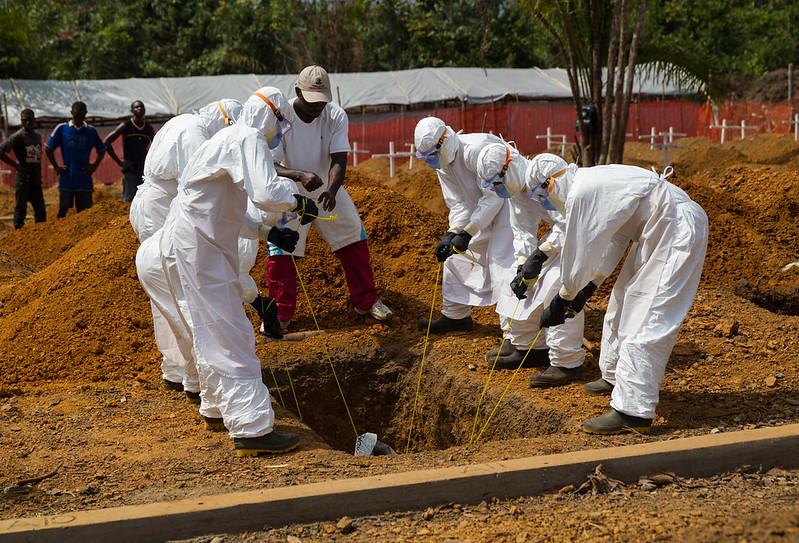
Multiple factors are hampering containment efforts. Insecurity, population displacement, and cross-border movements complicate surveillance, contact tracing, and safe burial practices. The WHO and CDC have both warned that the outbreak is spreading faster than response teams can track and isolate cases. As of late August, only 82.3% of identified case contacts were under follow-up in affected provinces.
Humanitarian conditions in eastern DRC further exacerbate the crisis. The region has long been plagued by armed conflict, which disrupts health services and forces communities to flee, making it harder to deliver care and monitor contacts. Funding for the response is also critically low, with UN responders issuing urgent appeals for international support.
Response efforts and treatment gaps
National authorities, in collaboration with the WHO, Africa CDC, and other partners, are scaling up response activities. New treatment centers have opened in hard-hit areas, and training for health workers is underway. Surveillance and community engagement have been identified as priority areas by WHO leadership following recent missions to the DRC.
However, a major challenge remains: there is currently no approved vaccine or specific treatment for the Bundibugyo species of Ebola. Unlike the Zaire ebolavirus, for which licensed vaccines and monoclonal antibody treatments exist, Bundibugyo lacks targeted countermeasures, forcing responders to rely on supportive care and infection prevention measures. This gap significantly limits the ability to reduce mortality and curb transmission.
Global implications and outlook
With nearly 6,000 confirmed cases and a fatality rate approaching 50%, this outbreak is on track to become the second-largest Ebola epidemic in recorded history, after the 2014–2016 West African outbreak that killed more than 11,000 people. If current trends continue, it could surpass that toll, particularly given the lack of vaccines and the complex security environment in eastern DRC.
The international community faces a critical window to prevent further escalation. Enhanced funding, expanded treatment capacity, improved contact tracing, and accelerated research into Bundibugyo-specific vaccines and therapeutics are urgently needed. Without a substantial scaling up of resources and coordination, the outbreak risks spreading further within the DRC and across borders, with devastating human and economic consequences.
As of 30 August 2026, the situation remains fluid, with case counts expected to rise as investigations continue. The DRC’s health ministry and global partners are racing against time to bring the epidemic under control before it becomes the deadliest Ebola outbreak in human history.
Written by
Lawrence JLawrence John is the Founder and Editor of Africa Daily Dispatch, an independent digital publication focused on delivering timely, accurate and context-driven coverage of Africa and the wider world.
See more of our stories on Google
Add The Africa Daily Dispatch as a preferred source and we'll appear more often in your Top Stories.
Comments
Join the conversation.
Loading comments…