Faith, Debt, and a Beachfront Hotel: The PCEA’s KSh700 Million Battle to Save Milele
In late August 2026, the Presbyterian Church of East Africa (PCEA) made headlines across Kenya with an urgent appeal to its 4.8 million members: help raise approximately KSh700 million to save Milele Beach Hotel, a nine-acre seafront property in Bamburi, Mombasa, from receivership and potential auction. What began as a strategic church investment in 2007 has spiraled into a financial, legal, and theological crisis that has split church leadership, sparked public debate about accountability, and raised fundamental questions about the intersection of faith, business, and member contributions.
The Property: Milele Beach Hotel at a Glance
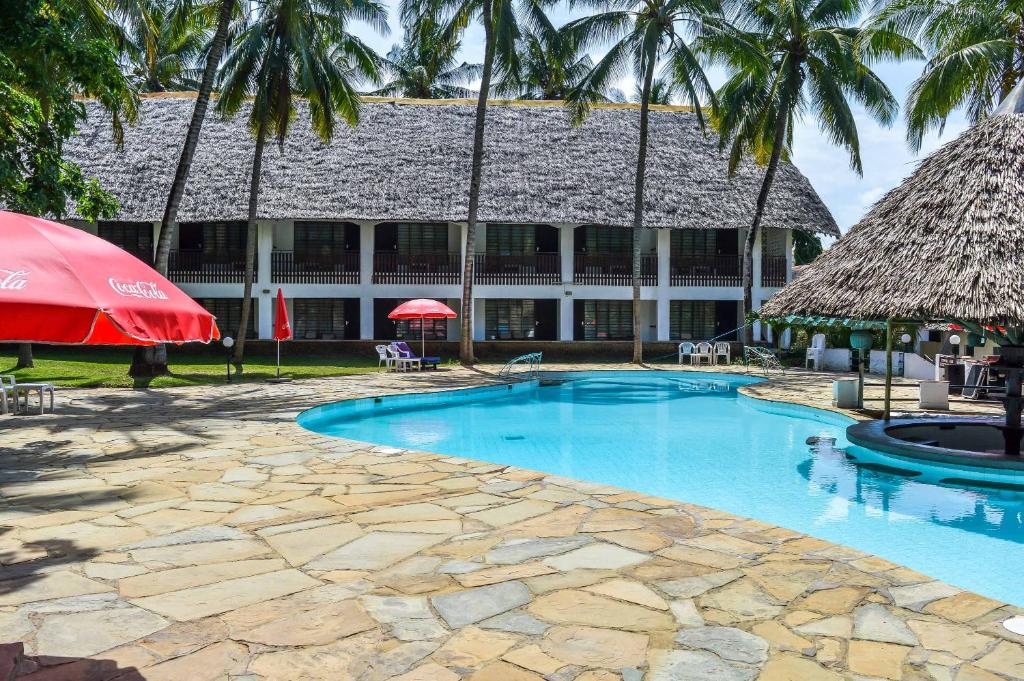
Milele Beach Hotel is a three-star, non-alcoholic, non-smoking beachfront establishment located along Malindi Road in the Bamburi Beach area, about 20 minutes north of Mombasa city center and close to Haller Park. Originally known as Giriama Beach Hotel, the property was acquired by the PCEA’s investment arm, the Presbyterian Foundation, in 2007 and rebranded as a Christian hospitality destination catering primarily to families, church groups, and corporate retreats.
The hotel features 72 en-suite rooms (Standard and Deluxe options) and 10 two-bedroom self-catering apartments suitable for families and larger groups. Amenities include direct access to Bamburi Beach, two large outdoor swimming pools (including a children’s pool), the Milele Restaurant serving Swahili, Kenyan, and international cuisine, and extensive conference and event facilities with five halls and expansive gardens for weddings and workshops. Current booking listings show standard room rates starting at about KSh10,040 per night, though prices fluctuate by season.
Critically, PCEA describes Milele as “the only non-alcoholic establishment on that stretch of the coast,” positioning it as a unique faith-based sanctuary in a region dominated by conventional beach resorts.
The Debt Crisis: From KSh650 Million to Over KSh1 Billion
The financial troubles trace back to a 2010 decision by then-management to expand the property by constructing 85 modern apartments intended for off-plan sale at KSh20–25 million each. To finance this expansion, the church took a loan of approximately KSh650 million. According to PCEA Secretary General Rev. Robert Waihenya, the plan was sound: sell the units before completion, use proceeds to establish the hotel more firmly, and repay the loan. The-star
However, a series of external shocks derailed the project. Starting around 2011–2013, the Coast region experienced a wave of terrorism attacks that severely depressed tourism and property demand. By the time security improved, construction had stalled, interest had accumulated, and only about 20 buyers had paid deposits. The hotel was operating just 10 out of roughly 80 rooms, rendering it financially unsustainable.
The situation worsened during the COVID-19 pandemic, which devastated Kenya’s hospitality sector. A church audit concluded the business remained viable, and a committee recommended completing two apartment blocks using member contributions and buyer payments. The church raised KSh125 million of the KSh130 million needed, but internal disagreements delayed construction. During this period of indecision, leadership changed, and the loan balance ballooned due to accrued interest and penalties despite monthly payments of about KSh13 million.
Compounding the problem, buyers who had paid deposits sued and were awarded substantial damages, one who paid KSh3 million received KSh7 million; another who paid KSh8 million got an even larger award for loss of income. Part of the KSh125 million raised was used to settle these court awards. By the time the 24th General Assembly leadership took office, the loan had exceeded KSh1 billion.
Legal Battles and Receivership
The debt dispute triggered years of litigation between the Presbyterian Foundation, Presbeta Investment Ltd (a PCMF-owned vehicle that sought to acquire the hotel in 2015 via a KSh1.2 billion Asset Purchase Agreement), and the National Bank of Kenya (NBK). Court records show that as of December 2015, the outstanding loan stood at KSh767.6 million, secured by multiple Mombasa properties. Presbeta agreed to take over the loan but failed to pay a required KSh150 million deposit, prompting NBK to appoint auctioneers.
In 2018, the Environment and Land Court struck out Presbeta’s suit, ruling the dispute belonged in arbitration. By 2023, auctioneers had proclaimed goods at the hotel, but in March 2024 the court set aside the proclamation, holding that execution should target Presbeta, not the Foundation. Nevertheless, in December 2024, NBK appointed Kamal Anantroy of Anant Bhatt LLP as receiver and manager over the property.
In January 2025, the Presbyterian Foundation sued NBK over a statutory notice seeking sale of properties linked to the KSh811 million facility, arguing it had paid over KSh2.3 billion and was current on monthly installments of about KSh13 million. NBK countered that the account was in serious arrears and that construction of the planned luxury apartments remained incomplete. Nation
The KSh700 Million Rescue Campaign
By mid-2026, negotiations between PCEA and the bank (now identified in some reports as KCB following restructuring) reduced the outstanding debt from KSh1.07 billion to KSh753 million, with the church paying an initial KSh50 million. The church now faces a three-month deadline to raise the remaining KSh703 million to redeem the property and avoid receivership.
In letters dated July 21 and August 28, 2026, PCEA outlined three fundraising strategies: seeking government support, pursuing compensation for its Westlands property, and mobilizing member contributions through a dedicated Paybill and other channels. About 500 clerics were scheduled to meet President William Ruto at State House, though Moderator Thegu Mutahi emphasized the church’s independence and non-partisan stance.
The public appeal, reinforced in Sunday sermons by leaders like retired Moderator Jesse Kamau, urged members to give “willingly, cheerfully, knowingly and sacrificially,” framing contributions as giving to God rather than bailing out a mismanaged business. This messaging sparked significant backlash, with critics questioning why ordinary worshippers should shoulder the burden of a commercial venture that does not directly benefit them.
Leadership Split and Internal Controversy
The crisis has exposed deep divisions within PCEA’s top leadership. Reports indicate a split between Moderator Thegu Mutahi and Secretary General Robert Waihenya over strategy and accountability. Waihenya has described the situation as “spiritual warfare,” attributing the hotel’s woes to terrorism, the pandemic, court awards, loan interest, and unnamed individuals seeking to acquire the property through unscrupulous means.
He also noted that the church recently constructed a KSh300 million church on the Milele site, making the property even more strategically important. Despite paying over KSh900 million toward the loan over the years, Waihenya insists the church cannot afford to lose Milele and has resolved “unequivocally” that the hotel is not for sale.
Broader Implications: Faith, Finance, and Accountability
The Milele saga has ignited a national conversation about the governance of church-owned enterprises, the ethics of soliciting member donations for commercial debts, and the transparency of religious institutions’ financial dealings. Critics argue that the KSh700 million appeal blurs the line between spiritual giving and business rescue, potentially exploiting congregants’ faith.
Supporters, however, contend that Milele represents a long-term mission asset that, if saved, could generate sustainable income for church programs across 61 presbyteries. They point to the property’s unique positioning as a faith-based, family-friendly destination in a competitive coastal market.
The outcome of the rescue effort, whether through member contributions, government intervention, or asset restructuring, will likely set a precedent for how Kenyan churches manage commercial investments and engage their memberships in financial crisis.
Current Status and What’s Next
As of early September 2026, the fundraising campaign is ongoing, with the church relying on its Paybill, presbytery mobilization, and potential state support to meet the three-month deadline. The hotel remains operational but under the shadow of receivership, with its future hinging on the success of the KSh703 million redemption effort.
For PCEA’s 4.8 million members, the decision to contribute is not merely financial but theological: Is supporting Milele an act of faith and stewardship, or an endorsement of questionable financial management? For Kenya’s broader religious and business communities, the Milele case underscores the risks of mixing spiritual authority with commercial ambition, and the high stakes when the two collide.
In the words of Secretary General Waihenya: “This is a spiritual problem and that is why I have stood and said we are not selling.” Whether faith, finance, or a combination of both will save Milele Beach Hotel remains to be seen.
Written by
Lawrence JLawrence John is the Founder and Editor of Africa Daily Dispatch, an independent digital publication focused on delivering timely, accurate and context-driven coverage of Africa and the wider world.
See more of our stories on Google
Add The Africa Daily Dispatch as a preferred source and we'll appear more often in your Top Stories.
Comments
Join the conversation.
Loading comments…