Sorry, Nairobi”: US TV Host Rob Finnerty Forced to Apologise After Calling New York ‘More Like Nairobi’
US journalist Rob Finnerty has apologised to Kenyans after using Nairobi as a shorthand for urban disorder while discussing immigration in New York City
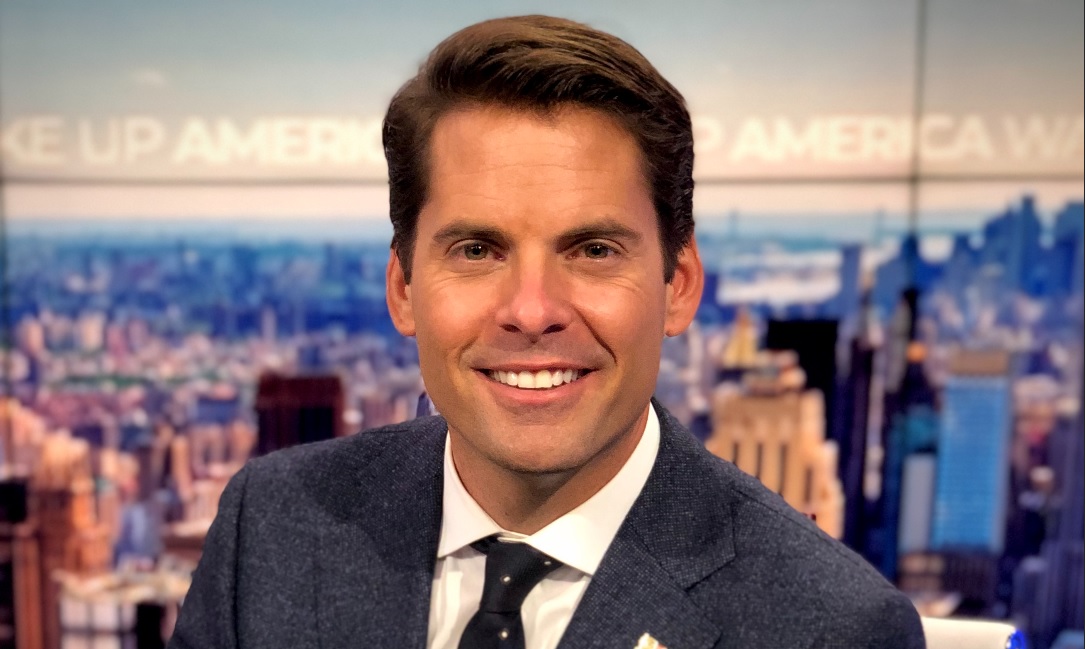
What Finnerty said
The controversy began during a Newsmax broadcast on October 9, 2026, in which Finnerty discussed immigration, street conditions and delivery workers in New York City. He argued that migration from developing countries during former President Joe Biden’s administration had altered the character of some American cities.
“They move to blue sanctuary cities, and the cities then start to look more like Nairobi than New York City,” Finnerty said during the segment.
The comment was not merely a passing geographical reference. By contrasting New York with Nairobi, Finnerty implied that Nairobi represented decline, disorder or a lower standard of urban life. That framing was what Kenyan social-media users found objectionable: Nairobi was being invoked not as a real city with its own complexities, but as an insult in an American immigration argument.
The backlash
Kenyans quickly flooded Finnerty’s and Newsmax’s social-media pages with criticism. Many asked whether he had ever visited Nairobi, while others pointed out that none of the people shown in the segment had identified themselves as Kenyan or from Nairobi. That detail became central to the criticism: the comparison appeared detached from any evidence connecting the people or conditions discussed to Kenya’s capital.
The reaction also tapped into a longer-running frustration among many Africans about how international media portray African cities. Critics argued that foreign commentators often reach for African capitals as symbols of chaos, poverty or failure, even when the subject under discussion has no clear African connection. In this case, opponents said the remark reinforced a lazy and damaging stereotype.
For many Kenyans, the issue was not that Nairobi is beyond criticism. Like any major city, it faces congestion, housing pressures, inequality, waste-management challenges and uneven public services. The objection was to Nairobi being deployed as a blanket metaphor for disorder, especially by a commentator discussing a city he appeared not to know firsthand.
The apology
Facing mounting criticism, Finnerty issued a public apology on X on October 12, followed by a further apology on October 13. He wrote: “I want to offer an apology to the people of Nairobi, Kenya. The passion you have for your city and homeland is amazing… We all make mistakes. I misspoke, and I am sorry to anyone I have offended.”
The apology acknowledged that the remarks had caused offence and praised Kenyans’ attachment to their city. But it stopped short of explaining why Nairobi had been chosen for the comparison, offering no detailed correction of the underlying claim, and did not address demands from some Kenyans for an on-air apology comparable in prominence to the original broadcast.
That gap explains why the apology did not fully settle the matter. Several Kenyan users welcomed the expression of regret, while others described it as insufficient because the original comment had been made on a national television programme, whereas the apology appeared on social media.
Why the comparison failed
Finnerty’s remark rested on an assumption rather than a verifiable comparison. He did not cite data showing that New York had become more like Nairobi in crime, infrastructure, sanitation, governance or any other measurable indicator. Instead, the phrase worked as political rhetoric: “Nairobi” was used to signal something negative to a US audience presumed to share that perception.
That is what made the comment journalistically weak. A serious discussion of immigration, urban pressure or public order in New York should rely on specific evidence, housing costs, service delivery, crime statistics, labour conditions or municipal policy, not on a foreign city used as a rhetorical punchline.
It also ignored Nairobi’s actual profile. The city is Kenya’s political and economic centre, a major regional business hub and home to a large service, technology and logistics economy. It has visible challenges, but presenting it primarily as a symbol of urban failure erases both its realities and its diversity.
A familiar media pattern
The episode has renewed debate about how African places are treated in Western political commentary. African cities are frequently invoked in US and European debates about migration, insecurity or governance, often without local context, reporting or consultation. Such references can turn entire populations into props in another country’s domestic argument.
The Kenyan response showed that audiences increasingly challenge those framings in real time. Social media gave Kenyans a direct route to confront Finnerty, demand accountability and force a public correction. The apology may not have satisfied everyone, but the speed and scale of the backlash demonstrated that casual stereotypes no longer pass without scrutiny.
Written by
Lawrence JLawrence John is the Founder and Editor of Africa Daily Dispatch, an independent digital publication focused on delivering timely, accurate and context-driven coverage of Africa and the wider world.
See more of our stories on Google
Add The Africa Daily Dispatch as a preferred source and we'll appear more often in your Top Stories.
Comments
Join the conversation.
Loading comments…