“Pack and Leave”: Ruto’s Crackdown on Tata Chemicals and Kenya’s Resource Nationalism
In a dramatic escalation of a months-long regulatory dispute, President William Ruto has ordered Indian multinational Tata Chemicals to cease operations and leave Kenya, accusing the company of extracting soda ash from Lake Magadi for decades without delivering meaningful industrialisation, jobs or local value addition.
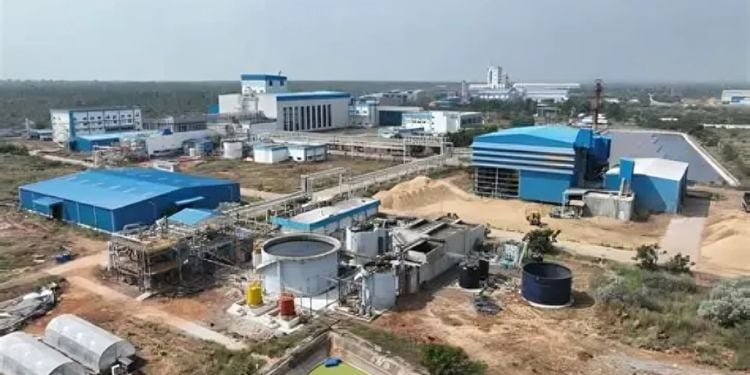
The directive, delivered during a public rally in Kajiado County on Thursday, September 3, 2026, marks a sharp turn from a compliance review into a high-stakes confrontation over who controls and benefits from one of Kenya’s oldest and most strategic mineral resources.
The Order: “Pack and Leave”
Speaking in Oloiren, Kajiado, Ruto said Tata Chemicals Magadi Limited (TCML) had held mining rights around Lake Magadi for about a century but had “not built anything in Kajiado” and had failed to employ locals or establish downstream industries. “I told them to pack and leave. They have been taking our resources and shipping them to India. We will bring a new company and the condition set is they must build a glass factory here,” the President said.
Ruto added that the government would bring in two new investors: one to set up a major glass manufacturing plant in Kajiado and another to manufacture chemicals locally, using soda ash from the lake as feedstock. The message was clear: Kenya no longer wants to be a mere exporter of raw or semi-processed minerals; it wants factories, skills and higher-value production on its own soil.
Background: A Century of Soda Ash at Lake Magadi
Commercial soda ash production at Lake Magadi began in 1911 under what was then the Magadi Soda Company, making it one of East Africa’s oldest large-scale mining operations. The lake sits in Kajiado County, south-west of Nairobi, and contains vast deposits of trona, a naturally occurring sodium carbonate mineral that is processed into soda ash.
Soda ash is a critical industrial input used in glass manufacturing, detergents, chemicals and water treatment. Kenya’s soda ash exports in the year to July 2025 totalled 254,779 tonnes, valued at $56.9 million, according to government data cited in reports. Tata Chemicals entered the picture in 2005 when it acquired the operation as part of its purchase of the Brunner Mond Group; the business was later rebranded as Tata Chemicals Magadi Limited in 2011. So while the Magadi operation is more than a century old, Tata has owned and run it for about 21 years.
The company says it exports more than 350,000 tonnes of soda ash annually to markets in Southeast Asia, India, the Middle East and Africa, and that its Kenyan subsidiary is a significant earner of foreign exchange. It also says around 500 employees and their families, plus contractors, suppliers, transporters and local businesses, depend directly or indirectly on the operation, with community programmes benefiting an estimated 30,000 people in the Magadi area through support for water, healthcare, education and infrastructure.
From Compliance Review to Political Ultimatum
The current crisis did not begin with Ruto’s “pack and leave” remark. On July 28, 2026, Mining Cabinet Secretary Hassan Joho ordered TCML to suspend all mining operations pending a compliance review under the Mining Act and related regulations. The ministry cited a long list of unresolved issues, including:
Royalty reconciliation and payments
Export reporting and documentation
Mineral beneficiation and value addition
Community development agreements
Employment and skills transfer for Kenyan citizens
Procurement from local suppliers
Environmental compliance
According to the government, these were not new concerns; officials said they had been engaging Tata “for years” over its statutory obligations and demanded proof of compliance and settlement of outstanding liabilities before operations could resume.
Tata Chemicals has disputed the implication that it is non-compliant. In an August 19 filing, TCML said it had submitted all information, reports and documentation requested by the Ministry of Mining, Blue Economy and Maritime Affairs, and that it remained “fully compliant” with applicable regulatory requirements. In a September 4 communication to India’s National Stock Exchange, the parent company said it was awaiting further communication from the Kenyan government regarding the review and remained “committed to constructive engagement.”
Legally, the dispute has already touched the courts. Tata challenged the July suspension, but Kenya’s High Court declined to lift it, with the government arguing that the company did not have a current mining licence because its application was still being processed. A Kenya Gazette notice recorded TCML’s application for a mining licence covering about 63.5 square kilometres in Kajiado for soda ash extraction. Separately, in 2025, the Court of Appeal ruled in Tata’s favour in a dispute with Kajiado County over land rates, holding that the county’s demand for arrears was arbitrary and illegal in the absence of a transparent rate-setting mechanism.
The Core Grievance: Value Addition, Not Just Extraction
Ruto’s intervention reframes the dispute from a technical compliance issue into a broader economic argument. His central complaint is that Kenya has allowed a foreign company to operate a strategic mineral asset for more than a century without catalysing the kind of industrial transformation the resource should enable.
“Are we slaves to other people?” Ruto asked in Kajiado, questioning why Kenya should remain dependent on foreign firms to exploit its natural resources while remaining at the lower end of the value chain. His answer is to demand that future operators commit to onshore processing and manufacturing.
Soda ash is a key raw material for glass. Kenya’s logic, as articulated by Ruto, is straightforward: if the country has abundant soda ash, why not build a domestic glass industry around it? Why export the intermediate product and import finished glass and chemicals, instead of capturing more of the value at home?
This aligns with a wider policy push across Africa to move beyond raw commodity exports toward beneficiation and local industrialisation. In practical terms, Ruto wants the next investor at Magadi to commit to:
Establishing a major glass manufacturing plant in Kajiado
Setting up a chemicals manufacturing facility using local soda ash
Creating jobs and skills for Kenyans, particularly from Kajiado
Procuring more inputs locally and strengthening linkages with Kenyan suppliers
Honouring community development obligations and environmental standards
Economic and Social Stakes: Jobs, Revenue and Community Livelihoods
The order places more than 600 direct jobs at immediate risk, with wider ripple effects for contractors, transporters, suppliers and local businesses that depend on the plant’s activity. Tata’s own figures suggest that hundreds of employees and their families, plus thousands more in the local economy, rely on the operation.
At the same time, some residents and local leaders have expressed frustration over what they see as inadequate local employment, limited skills transfer and insufficient community benefits relative to the scale of the resource being extracted. This has given Ruto’s stance political resonance in Kajiado, where the narrative of “our resources, our benefit” carries weight.
However, the suddenness of the exit order has also raised concerns about economic disruption. Soda ash is one of Kenya’s important export commodities, and any prolonged interruption in production could affect export revenues, foreign exchange earnings and supply contracts with regional and global buyers. There are also questions about how quickly a new investor can be found, licensed and operationalised without creating a production gap.
Market Reaction and Corporate Fallout
The political shock was felt immediately in financial markets. Shares of Tata Chemicals fell sharply on Indian exchanges after news of Ruto’s directive, dropping to a day low of around Rs 625 on the BSE, as investors weighed the risk of losing a significant overseas asset. Analysts noted that Tata Chemicals had already reported a consolidated net loss for the June 2026 quarter, and the Kenya exit order added to pressure on the stock, which has declined more than 30 per cent over the past year.
For Tata, the stakes are not only financial but reputational. The company has long marketed its African operations as part of a broader strategy of responsible, long-term investment in emerging markets. Losing the Magadi asset under a cloud of political controversy could complicate its narrative in other African jurisdictions where it holds or seeks mining and chemicals interests.english.
Legal and Diplomatic Dimensions
While Ruto’s remarks were politically forceful, the actual process of removing Tata and installing new operators will be legally complex. TCML has existing assets, contracts, employees and regulatory filings; any termination of rights or forced transfer will have to navigate Kenya’s Mining Act, investment protection provisions and potentially bilateral understandings between Kenya and India.english.
Tata has signalled it intends to work through legal and regulatory channels. Its public statements emphasise compliance, cooperation and a willingness to resolve outstanding issues with the government. If the state moves to cancel licences or expropriate assets without due process or compensation, the company could pursue domestic legal remedies or, depending on the structure of its investments, international arbitration.english.
There is also a diplomatic layer. India and Kenya have deepening trade and investment ties, with Indian firms active in manufacturing, pharmaceuticals, energy and services in Kenya. A high-profile confrontation over a century-old mining asset risks straining that relationship if not handled carefully, even as Nairobi argues it is asserting legitimate sovereign rights over its resources.english.
The Bigger Picture: Kenya’s Resource Nationalism
Ruto’s move fits into a wider global trend of resource nationalism, where governments seek to renegotiate terms, increase local content requirements or push for more onshore processing of minerals. Across Africa, countries have moved to assert greater control over mining sectors, citing historical imbalances, limited local benefits and the need to industrialise.
In Kenya, the Magadi case is becoming a test of whether the state can translate that rhetoric into a workable model: one that attracts credible investors, enforces compliance, safeguards jobs and actually delivers the promised factories and skills. Critics will ask whether the problem lies solely with Tata or also with decades of weak enforcement, inconsistent policy and missed opportunities by successive government.
Supporters, meanwhile, will argue that without political will and clear ultimatums, multinational operators have little incentive to move beyond extraction and minimal processing. From this perspective, Ruto’s hard line is a necessary shock to reset the terms of engagement around Kenya’s mineral wealth.
What Comes Next
In the immediate term, several scenarios are possible:
Negotiated settlement: Tata and the government could agree on a compliance roadmap, investment commitments and a revised operating framework that keeps the company in place under stricter value-addition conditions.
Managed exit and transition: If talks fail, the state could move to terminate TCML’s rights and initiate a tender for new investors, ideally with a transition plan to minimise production disruption and protect workers.
Prolonged dispute: If legal challenges drag on and no clear successor investor is ready, Magadi’s operations could remain suspended for an extended period, with economic and social costs for the region.
Much will depend on how quickly the Mining Ministry and related agencies can design and implement a credible tender process, specify binding local-content and value-addition requirements, and ensure that any new operator has the technical and financial capacity to run a complex chemicals business. It will also depend on whether the government can insulate the process from perceptions of political interference or elite capture, especially given murmurs in some media about possible commercial interests behind the push.
Conclusion: A Defining Test for Kenya’s Industrial Ambition
President Ruto’s order to Tata Chemicals is more than a single corporate dispute; it is a statement of intent about how Kenya wants to manage its natural resources in the 21st century. The core question is no longer just whether Tata complied with every regulation, but whether the existing model of mining and exporting soda ash serves Kenya’s long-term development goals.
If handled well, the Magadi episode could become a catalyst for genuine industrialisation: new glass and chemicals plants, more skilled jobs in Kajiado, stronger local supply chains and a template for other mineral sectors. If mishandled, it could lead to protracted legal battles, investor caution and lost revenues, with local communities paying the price.
For now, Tata Chemicals says it is awaiting the government’s review of its submissions and remains committed to resolving the dispute through legal and regulatory channels. Ruto, for his part, has drawn a line: the next chapter at Lake Magadi must be written around factories, jobs and Kenyan benefit, not just exports of raw and semi-processed minerals. How that vision translates into reality will define not only the fate of one company, but the credibility of Kenya’s broader industrial and resource strategy
Written by
Lawrence JLawrence John is the Founder and Editor of Africa Daily Dispatch, an independent digital publication focused on delivering timely, accurate and context-driven coverage of Africa and the wider world.
See more of our stories on Google
Add The Africa Daily Dispatch as a preferred source and we'll appear more often in your Top Stories.
Comments
Join the conversation.
Loading comments…