Masengeli Warns Politicians as Police Step Up Preparations for Violence-Free 2027 Elections
The National Police Service has issued a strong warning ahead of Kenya’s 2027 General Election, promising intensified efforts to prevent, detect and respond to political violence while urging politicians to exercise responsibility as political competition begins to intensify.
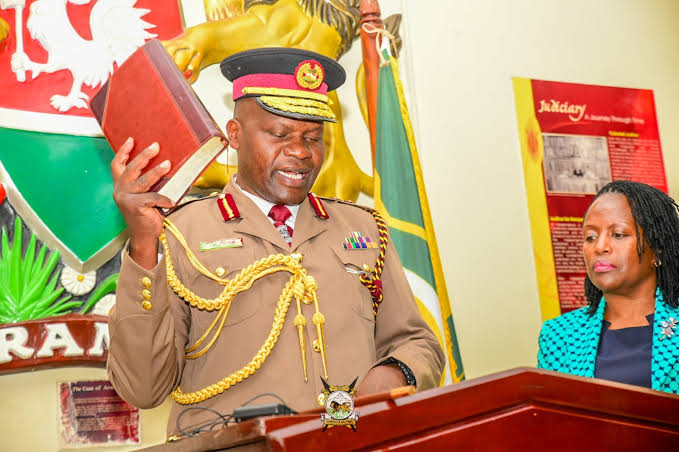
Speaking during the launch of the National Cohesion and Integration Commission’s roadmap for violence-free 2027 elections, the Masengeli said the police would work closely with the NCIC and other stakeholders to ensure the country remains secure before, during and after the elections.
Masengeli placed prevention at the centre of the police approach, arguing that security agencies should not wait until political tensions have escalated before taking action.
“When tensions have already escalated, prevention must therefore remain the center of our approach.”
According to the DIG, the National Police Service will strengthen early-warning and early-response mechanisms while expanding community engagement. The remarks point to an approach in which potential sources of conflict are addressed before they develop into serious security incidents.
The police leadership also emphasised cooperation between state institutions. Although independent commissions and agencies have different mandates, the DIG stressed that they ultimately depend on one another when it comes to protecting Kenya.
The central message was that national security cannot be handled by one institution acting alone.
Political leaders warned over influence on supporters
One of the strongest messages from the DIG was directed at political leaders and other political actors.
The police boss said politicians have a particularly important role because they possess the ability to either calm their supporters or inflame political tensions.
The DIG therefore urged political actors to embrace issue-based competition and to respect their opponents, particularly during periods of heightened political emotions.
The warning comes with a reminder that constitutional rights are not absolute when exercising one person’s rights threatens the rights and security of others.
The DIG stressed that every individual has rights, but those rights should not be used in a manner that undermines the rights of other Kenyans.
This creates a significant message for the political class ahead of 2027: political competition will be permitted, but the police expect it to remain within the boundaries of the law and respect for other citizens.
Police promise action against political violence
The DIG also outlined the security measures expected to feature in preparations for the 2027 elections.
These include surveillance, detection, investigation and prevention of crime, as well as action against incidents of politically instigated violence.
The police leadership indicated that individuals associated with political violence and those who support or sponsor such activities will face police attention.
This is one of the clearest signals from the speech that the National Police Service intends to take a more proactive approach to political violence rather than waiting for incidents to occur.
The DIG also referred to the possibility of recommendations being made concerning individuals seeking political office based on their track records relating to violence and political and civil rights.
The remarks place political conduct under greater scrutiny as the country approaches the election period.
Peaceful elections must protect rights
While emphasising security, the DIG also linked peaceful elections to the protection of civil and political rights guaranteed by the Constitution.
The police, he said, have a responsibility to safeguard public security while respecting individual rights.
This balance is important because election security can involve competing demands: authorities must prevent violence and threats to public safety while ensuring that citizens retain their lawful political and civil freedoms.
The DIG therefore urged Kenyans to understand the limits that arise when individual actions threaten national security or the common good.
His message was not simply that the police would enforce security measures, but that such measures would have to operate within the law.
Police to work with multiple agencies
The National Police Service also plans to work with other security agencies and institutions involved in the electoral process.
The DIG said the police would participate fully in securing electoral arrangements and programmes associated with the election, working alongside other agencies and organisations.
This cooperation extends to the NCIC, whose violence-prevention roadmap was the focus of the event.
The DIG's remarks therefore presented the 2027 election as more than an electoral exercise. It is also a major national security undertaking requiring coordination between security agencies, electoral institutions and other stakeholders.
The police intend to provide security before, during and after the elections.
Early warning becomes a major focus
Perhaps the most important strategic element of the speech was the emphasis on early warning.
Instead of waiting for political disputes to turn into violence, the police want to strengthen mechanisms that can detect emerging tensions and trigger an early response.
The DIG said community engagement would form part of this effort, including engagement at grassroots level and attention to vulnerable groups.
This suggests that preventing election violence will not be limited to police operations in major towns or around polling stations. The approach described in the speech involves communities and local-level engagement as part of identifying potential security threats.
The emphasis on prevention also aligns with the broader objective of the NCIC roadmap launched at the event.
A warning ahead of 2027
The DIG's speech ultimately delivered both an assurance and a warning.
The assurance was that the National Police Service would work to protect life and property and would cooperate with other institutions to provide security throughout the electoral period.
The warning was directed particularly at political actors who could contribute to violence or instability.
Political leaders were urged to compete on issues, respect their opponents and recognise the influence they have over their supporters.
The speech also reinforced the idea that election peace cannot be achieved by the police alone.
As Kenya moves toward the 2027 General Election, the DIG's message is that security preparations must begin early, political actors must act responsibly and institutions must work together.
The National Police Service appears to be positioning prevention, early warning, investigation and enforcement as central components of its election-security strategy.
For politicians and their supporters, the message is equally direct: political competition is expected, but violence will not be treated as part of the democratic process.
With the police promising surveillance, investigation, arrests and preventive action against political violence, the DIG's remarks signal that the security agencies intend to be increasingly active as Kenya approaches the 2027 electoral contest.
Written by
Lawrence JLawrence John is the Founder and Editor of Africa Daily Dispatch, an independent digital publication focused on delivering timely, accurate and context-driven coverage of Africa and the wider world.
Comments
Join the conversation.
Loading comments…