Former CBK Deputy Governor Jacinta Mwatela On the Spot Over Goldenberg, Charterhouse, and Currency Tender
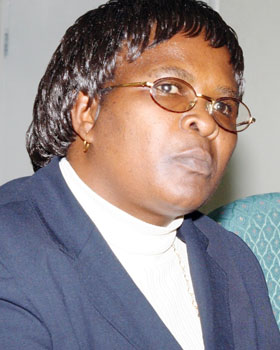
Jacinta Wanjala Mwatela, the former deputy governor of the Central Bank of Kenya (CBK), has resurfaced in public discourse as she recounts her three-decade career defined by confrontations with powerful political and business figures over some of Kenya’s biggest financial scandals.
A 32-year career marked by integrity and resistance
Mwatela joined the CBK in December 1977 as a graduate trainee and rose through the ranks over 32 years to become deputy governor in May 2005, later serving as acting governor in March 2006. Known for her uncompromising adherence to professionalism and the rule of law, she was repeatedly transferred between departments what she describes as a “bureaucratic merry-go-round” as her investigations into financial irregularities made her a marked person within the institution. [nation]
Her career path took her through the Exchange Control department, Bank Supervision, Estates, and the Deposit Protection Unit, where she consistently uncovered malfeasance involving tax evasion, money laundering, and regulatory breaches. “I was never anti-government. I was just a curious person and it is through that curiosity that I started to unearth a lot of things,” she told the Sunday Nation.
The Goldenberg scandal: refusing to sign fictitious documents
Mwatela’s first major confrontation came in the Exchange Control department, where she detected unusual remittances with no corresponding export declarations or customs forms. She noticed that funds were being routed through Swiss Air Flight 285 without any visible goods being exchanged, raising red flags about fictitious export compensation claims.
Her alerts were initially ignored by her director, but she persisted, refusing to sign documents she found suspicious. This put her on a collision course with controversial businessman Kamlesh Pattni, who was being “received like a king” at the CBK and would visit her office unannounced, sometimes name-dropping high-ranking officials including President Daniel arap Moi to intimidate her.
Former CBK Governor Micah Cheserem later acknowledged that the export exchange control system had become “a conduit for corruption,” recalling that Pattni was paid Sh5.8 billion in export compensation under what became known as the Goldenberg scandal, and ultimately owed the bank Sh10 billion. The scandal also involved a Sh1.2 billion overnight loan to Pattni’s Exchange Bank, with assets like the Grand Regency Hotel later taken as part of repayment.
For her refusal to comply, Mwatela was demoted and moved to a smaller office in the foreign trade department, then transferred to Bank Supervision nicknamed “Siberia” among staff as punishment. Yet even there, she continued to uncover irregularities, including a scheme where commercial banks appointed as government agents were converting customs duty collections into Treasury bills, effectively making the government borrow its own money.
Charterhouse Bank: shutting down a money laundering hub
In 2006, while leading the Deposit Protection Unit, Mwatela uncovered the Charterhouse Bank scandal, in which the bank was used as a massive conduit for tax evasion and money laundering estimated at about $2 billion. She described Charterhouse not as a legitimate bank but as a “money laundering entity” where deposits of deceased account holders were stolen when next of kin were unaware of the accounts. [nation]
At the time, money laundering was not yet a criminal offense in Kenya, but the Charterhouse case became a key driver for the enactment of the Proceeds of Crime and Anti-Money Laundering Act in 2010. The bank was shut down for improper lending practices, filing inaccurate returns with the CBK, and failure to properly document customer accounts—infractions Mwatela helped expose.
Her decision to close Charterhouse faced political resistance, including from then-Finance Minister Amos Kimunya, whose signature on the closure order she waited for from 4pm until past 10pm. The matter was debated in Parliament, where she was pressured to rescind the decision but refused, later vindicated by the Justice Abdul Majid Cockar report.
The currency tender that ended her CBK career
The final straw in Mwatela’s CBK tenure came over a currency printing tender. As chair of the tender committee, she oversaw a competitive bidding process for a new currency design, with five international firms submitting bids. The rules required designs to be submitted without identifying marks to prevent bias.
De La Rue International submitted the best design, while a French firm associated with the infamous Artur brothers was disqualified for illegal marking on its submission. Despite this, political pressure mounted to award the tender to the French firm, which Mwatela resisted.
Senator Boni Khalwale, recalled that Treasury officials wanted to use an interim order to bypass the procurement process and print currency at an inflated price, in a scheme he said aimed to steal around Sh3 billion. “The people wanted to steal around Sh3 billion at the time through the new currency printing deal and this is what she fought,” Khalwale said.
Sources:
- Daily Nation: “Jacinta Mwatela: Reggae lover who helped unearth Kenya’s biggest scandals” (August 23, 2026) [nation]
- NTV Kenya: “Retired CBK deputy governor Jacinta Mwatela: The bold and anti-graft crusader” (August 23, 2026) [youtube]
- NTV Kenya Facebook posts on Mwatela’s testimony (August 23, 2026) [facebook]
Written by
Lawrence JLawrence John is the Founder and Editor of Africa Daily Dispatch, an independent digital publication focused on delivering timely, accurate and context-driven coverage of Africa and the wider world.
Comments
Join the conversation.
Loading comments…