Capitation at the Crossroads: What Sh18.5 Billion Means for Kenya’s Schools This Term
Kenya’s public schools reopened on Monday, August 24, 2026, for the third and final term of the 2026 academic year against a familiar backdrop: a government announcement of fresh capitation funds, and a chorus of headteachers, unions and parents warning that the money still falls short of what is needed to run schools smoothly.
The official numbers: what was released and how it is split
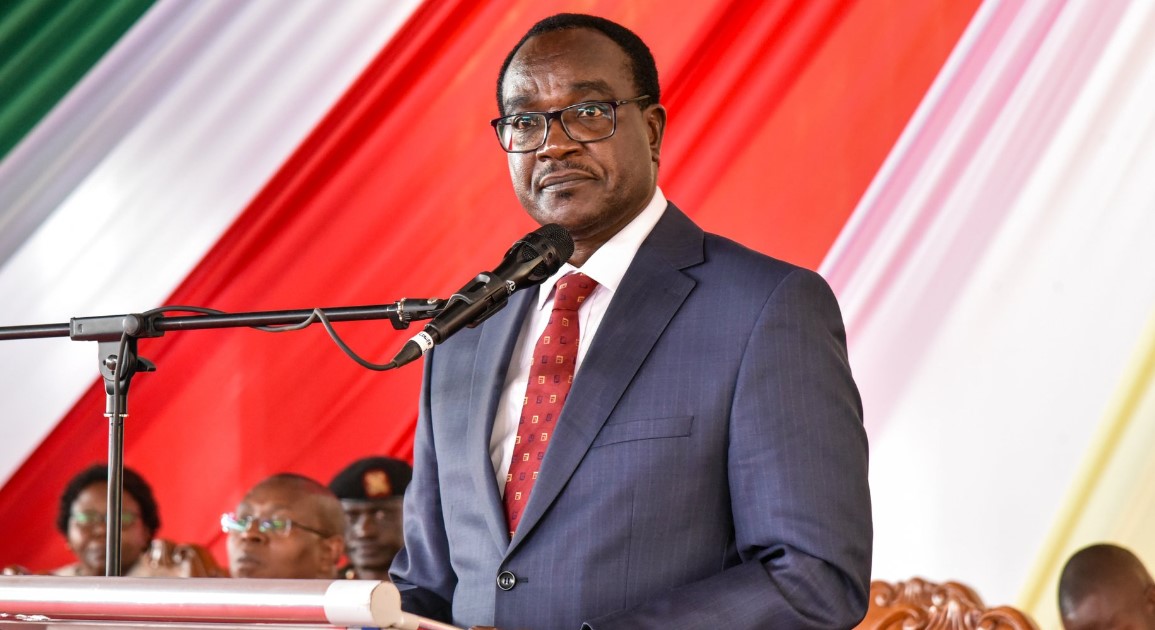
Education Cabinet Secretary Julius Ogamba stated that the State has disbursed Sh18,508,271,486.60 to public basic education institutions to support operations for the nine-week term running from August 24 to October 23, 2026. The allocation is broken down by level of education;
Free Primary Education (FPE): Sh1.40 billion
Free Day Junior School Education (Grades 7–9): Sh6.14 billion
Free Day Secondary Education (Grades 10–12): Sh10.96 billion
President William Ruto also publicly affirmed that Sh18 billion had been released to ensure “seamless learning” as the term began. On paper, this is a substantial injection of cash into a system that has been running on arrears and credit for much of the year.
The per-learner math: why “Sh18.5bn” still feels like too little
The controversy is not about whether the money was sent, but whether it is enough relative to the statutory capitation rates. According to Ministry of Education circulars and reporting, the expected capitation per secondary school learner for the full year is Sh22,244, apportioned as Sh11,122 in Term One, Sh6,673 in Term Two and Sh4,449 in Term Three. For Term Three alone, schools were supposed to receive Sh4,449 per learner.
However, the Ministry’s July 28, 2026 circular released Sh3,367.60 per learner for the third term, about Sh1,081.40 less than the expected Sh4,449. When this shortfall is added to underpayments or delays in the first two terms, the cumulative gap becomes stark. Reports indicate that by the start of Term Three, schools had received roughly Sh16,456.60 per learner against the expected Sh22,244, leaving a cumulative shortfall of about Sh5,787.40 per learner for the year. Some analyses put the cumulative deficit for public secondary schools at around Sh22.5 billion in withheld or delayed capitation from the first two terms.
Translated into everyday school life, this is not an abstract accounting issue. A deficit of nearly Sh6,000 per learner per year means that a school with 1,000 students is effectively operating with a Sh6 million hole in its budget. That gap has to be covered somehow: by delaying payments to suppliers, cutting back on essential items, or leaning on parents through informal levies despite official prohibitions.
Why the shortfall matters: exams, supplies and school debt
The third term is the shortest but also the most high-stakes. It is the final stretch before national examinations and assessments, when schools need to finalize revision materials, practicals, mock exams and boarding logistics. Headteachers warn that capitation shortfalls are piling up supplier debts and could threaten exam preparations. For schools already struggling with debt, securing supplies on credit is becoming harder, as vendors grow wary of unpaid bills.Nation
This dynamic creates a vicious cycle. When schools cannot pay on time, suppliers either stop delivering or demand cash upfront. Schools then either go without key inputs, chemistry reagents, food, fuel, exam printing, or turn to parents to fill the gap. That undermines the spirit of free basic education and places disproportionate pressure on low-income households, even as the government insists that no illegal levies should be charged.
The system behind the numbers: NEMIS, data and allocation headaches
Part of the problem is structural. Capitation is supposed to be tied to verified enrolment data, increasingly through the National Education Management Information System (NEMIS). Yet recent audits and investigations have exposed serious weaknesses: unreliable NEMIS enrolment data has led to both underfunding and overfunding of schools, with “ghost learners” and data mismatches denying some schools millions while inflating allocations elsewhere. When the data foundation is shaky, even well-intentioned disbursements can miss the mark, leaving some schools starved of funds while others sit on unutilized balances.
This is compounded by bureaucratic delays in issuing circulars and guidelines. Schools need clear, timely instructions on how much money is coming, when it will arrive, and how it should be allocated across vote heads (food, utilities, teaching materials, maintenance, etc.). When circulars arrive late or figures change mid-stream, headteachers are forced to make guesses that can later be questioned by auditors.
Politics, priorities and the bigger budget picture
The capitation debate also sits within a wider fiscal context. Since 2022, the national government has significantly expanded borrowing, with total public debt surpassing the Sh13 trillion mark. At the same time, there have been reports of idle foreign loans bleeding public coffers through commitment fees, with one analysis estimating Sh1.82 billion a year in avoidable fees, enough to finance capitation for nearly 10 million primary learners for one term at Sh2,020 per learner. In such an environment, education stakeholders find it difficult to reconcile macro-level borrowing with micro-level cash crunches in schools.
From a political standpoint, announcing Sh18.5 billion in capitation as schools reopen serves multiple purposes: it reassures parents that the government is supporting education, it counters narratives of neglect, and it aligns with the administration’s emphasis on delivering tangible services. Yet the persistent gap between announced figures and the lived reality of schools suggests that communication and actual funding adequacy are not fully aligned.
What different actors are saying
Unions such as KUPPET and KNUT, as well as school leadership associations, have been vocal about the insufficiency of capitation. They argue that partial or delayed disbursements force schools into unsustainable financial practices and risk compromising the quality of education, especially in the run-up to exams. Some headteachers have publicly noted that “Sh18 billion was sent last week,” but still warn that the cumulative shortfall leaves them unable to clear outstanding debts or fully fund exam-related activities.
On the other side, the Ministry of Education and the Presidency maintain that significant funds have been released and that schools should not impose illegal levies on parents. The tension arises because both statements can be true at once: money has been released, but not enough to cover the full cost of running schools as envisioned under the free education framework.
What would a more functional system look like?
Fixing the capitation problem does not require reinventing the wheel, but it does demand discipline and transparency:
Full and timely disbursement: Schools should receive the full statutory capitation per learner, on schedule, for each term. Partial payments should be the exception, not the norm, and clearly communicated with a catch-up plan.
Data integrity: NEMIS and related systems must be audited and cleaned to ensure that allocations reflect real enrolment, not inflated or outdated figures.
Predictable cash flow: Schools need to know in advance how much they will receive and when, so they can plan procurement, staffing and exam logistics without resorting to high-cost credit or informal levies.
Oversight and accountability: Regular public reporting on capitation disbursements—by county, by level, and by school category—would help identify bottlenecks and reduce opportunities for leakage or manipulation.
Written by
Lawrence JLawrence John is the Founder and Editor of Africa Daily Dispatch, an independent digital publication focused on delivering timely, accurate and context-driven coverage of Africa and the wider world.
Comments
Join the conversation.
Loading comments…